
Comparing aluminum vs wood pergolas in Kansas City comes down to one question: which material survives ten Missouri winters and summers with the least trouble? Aluminum resists rot, rust, and warping with almost no upkeep, while wood costs less to install but demands regular care. Homeowners planning an outdoor living upgrade through our Services should weigh both before choosing.
By Horizon Exteriors Team, KC Exterior Contractors
Aluminum vs Wood Pergolas in Kansas City: What Do They Cost Upfront?
Wood costs less upfront almost everywhere in the Kansas City metro, and that's the biggest reason homeowners default to it. Cedar and pressure-treated lumber are widely available locally, and the material itself costs less than powder-coated aluminum. Aluminum pergolas run higher because the frames are custom-fabricated from aluminum alloys, finished with a baked-on powder coat, and engineered to hold their shape without extra bracing. The price gap is real in year one, but it's only half the story: everything from here on is about what each material costs after the first winter.
How Wood and Aluminum Pergolas Hold Up After 10 Years of Kansas City Weather
Kansas City doesn't make it easy on outdoor structures. Summers bring high humidity, winters bring ice storms and freeze-thaw cycles that swell and contract anything with moisture in it, and spring brings straight-line winds that test every joint in a pergola frame. That decade-long test is really what deciding between aluminum vs wood pergolas in Kansas City comes down to, not the showroom sample.
Does a Wood Pergola Rot in Kansas City's Humid Summers?
Yes, untreated or poorly maintained wood can rot in Kansas City's humid summers. Wood is porous, and repeated cycles of absorbing summer humidity and drying out slowly break down the fibers, especially at joints and post bases where water pools. Cedar and treated pine resist rot longer than untreated lumber, but no wood pergola is fully immune once the protective seal wears through. Rot typically shows up first at ground contact points and fastener holes, where moisture has the most direct path into the grain.
Can an Aluminum Pergola Rust in Missouri Weather?
Aluminum pergolas don't rust the way steel does, because rust is iron oxide and there's no iron in an aluminum alloy to begin with. Within moments of exposure to air, a thin layer of aluminum oxide forms on the surface and seals the metal underneath, which is where the corrosion resistance comes from. Manufacturers don't build pergolas from pure aluminum, though; the process combines aluminum with small amounts of other elements, magnesium, silicon, zinc, to create alloys that add strength and dimensional stability pure aluminum doesn't have. These alloys (spelled "aluminium" outside the US) belong to the same family of metals widely used across construction, aerospace, and electrical wiring. The Aluminum Association has documented that aluminum ranks among the most recycled materials in the country. None of that changes month to month in a backyard, but it explains why an aluminum pergola in Kansas City can go a decade without a rust spot.
Which Material Survives Ice Storms and High Wind Better?
Ice storms are the harder test for both materials. A grown layer of ice adds real dead weight to a pergola's crossbeams, and Kansas City's ice storms have been severe enough to bring down mature tree limbs, let alone a lightly built structure. Aluminum pergolas are typically engineered with continuous welded or interlocking joints that distribute that load across the whole frame rather than concentrating stress at a handful of fasteners, which is why aluminum tends to hold its shape through an ice event that would rack a wood frame. Wood can be built to the same loads, but it depends heavily on the quality of the original construction, the fasteners used, and whether the wood has stayed dry enough to keep its structural integrity. A well-built wood pergola holds up fine; a poorly built one is usually the first to fail in a Kansas City wind event.
Which Pergola Material Needs Less Maintenance in Missouri's Humidity and Freeze-Thaw Cycles?
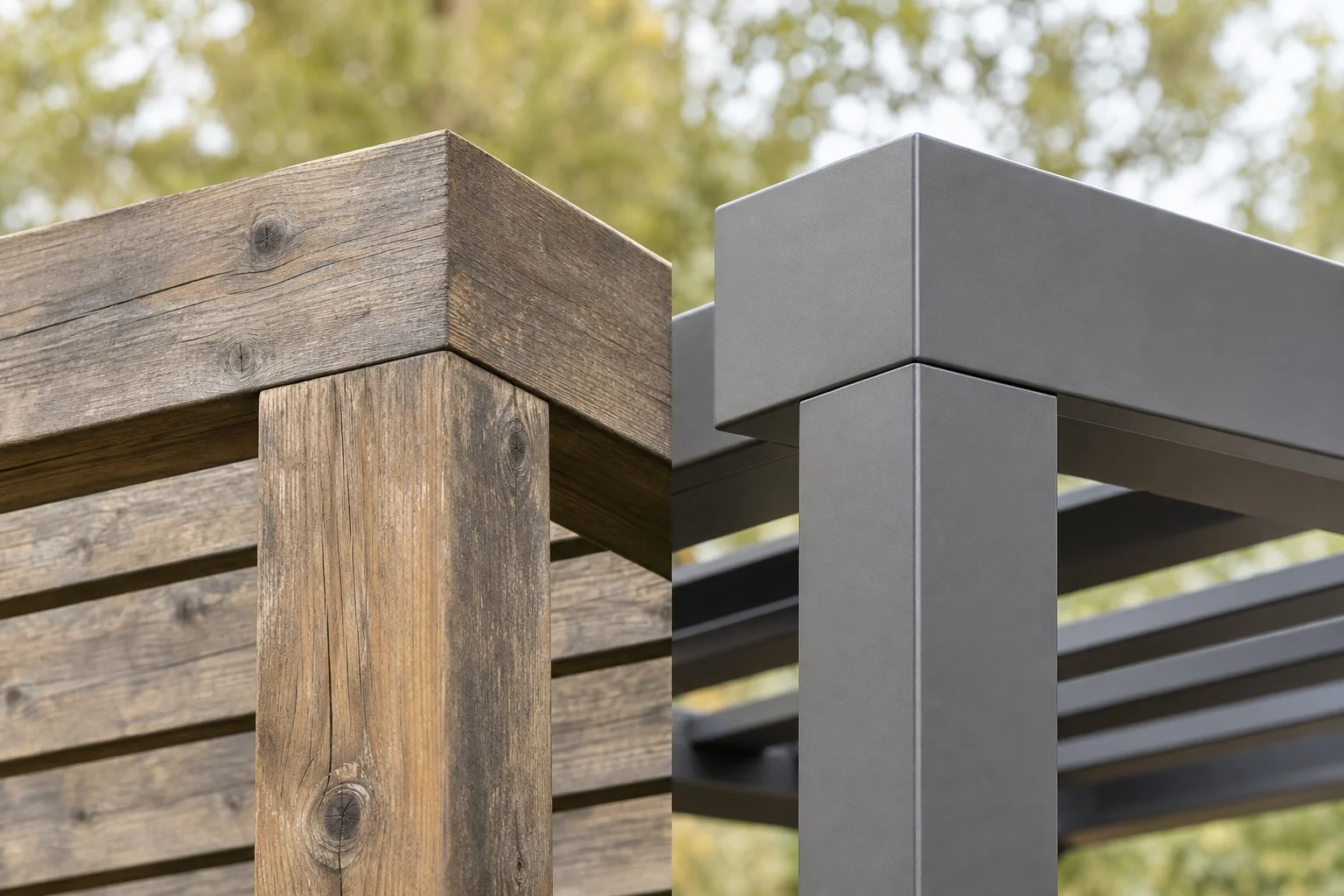
Aluminum needs less regular maintenance than wood in Missouri's climate. An aluminum pergola's powder-coat finish sheds pollen, dust, and mildew with an occasional hose-down or mild soap and water. There's no sealing, sanding, or re-staining, because the finish is baked onto the metal rather than applied on site and left to wear. Wood needs a more active maintenance routine to hold its color and keep water out of the grain, particularly through Missouri's freeze-thaw winters when trapped moisture inside an unsealed board can crack the wood as it expands and contracts.
How Often Do You Need to Reseal or Repaint a Wood Pergola?
Wood pergola maintenance in the Kansas City area usually means resealing or restaining every one to two years to keep water out of the grain, though the exact interval depends on sun exposure, wood species, and how much shade the structure gets. A pergola in full sun will need attention more often than one shaded by mature trees. Skipping a season or two doesn't ruin the structure outright, but it shortens the wood's useful life and makes rot more likely at the joints. This is the maintenance line item that adds up over a decade, and it's the one most homeowners underestimate when comparing sticker prices.
Long-Term Costs: Is Aluminum Cheaper Than Wood in the Long Run?
Over a full decade, an aluminum pergola typically costs less than wood once you account for the sealing, staining, and occasional board replacement that wood requires to stay structurally sound. Wood's lower upfront price is real, but it's offset by ongoing maintenance labor and materials that aluminum simply doesn't need. Aluminum's only real long-term cost is an occasional touch-up if the powder coat gets scratched to bare metal, which is rare compared to the recurring cost of keeping a wood structure sealed against Kansas City's humidity and freeze-thaw cycles. When homeowners weigh aluminum vs wood pergolas in Kansas City strictly on long-term cost, aluminum usually comes out ahead, though the answer still depends on how long they plan to keep the property and how much maintenance they're willing to do themselves versus hire out.
Which Pergola Material Adds More Resale Value to a Kansas City Home?
A well-built pergola adds to a home's outdoor living space either way, but aluminum tends to hold its value better because buyers don't have to guess at its remaining lifespan the way they might with an aging wood structure. An aluminum pergola that's ten years old typically looks close to how it did on day one, while a ten-year-old wood pergola shows its maintenance history, good or bad, right on the surface. For homeowners building a larger backyard plan, pairing a pergola with a screened-in patio enclosure tends to add more resale value than either structure alone, since it gives buyers usable outdoor square footage in more months of the year. A pergola alone reads as a nice-to-have; paired with a Sunrooms addition, it reads as real expanded living space.
Aluminum or Wood: The Better Pergola Choice for Kansas City's Climate Overall
For Kansas City's mix of humid summers, freeze-thaw winters, and occasional ice storms, aluminum is generally the stronger long-term choice. It resists the corrosion, rot, and moisture damage that Missouri's climate causes fastest, and it needs the least ongoing attention to keep looking finished. Wood still makes sense for homeowners who want a specific natural look, are working with a tighter upfront budget, or don't mind the maintenance routine that keeps a wood structure looking its best. Neither choice is wrong; the right one depends on how much time and money a homeowner wants to spend on upkeep versus upfront cost.
Can an Existing Wood Pergola Frame Be Converted to Aluminum?
Converting an existing wood pergola frame to aluminum usually isn't practical. Aluminum pergolas are engineered as complete systems, with posts, beams, and roof panels designed to work together structurally, so retrofitting aluminum components onto a wood frame not built to those tolerances typically doesn't hold up. In most cases, replacing a deteriorating wood pergola with a new aluminum structure gives a better result than converting the original frame piece by piece.
Frequently Asked Questions
Can an aluminum pergola rust in Missouri's weather?
No. Rust is iron oxide, and aluminum alloys don't contain iron, so an aluminum pergola won't rust like a steel structure. The metal forms a natural oxide layer on its surface that resists corrosion through Missouri's humid summers and freeze-thaw winters, which is why aluminum pergolas hold their finish for years with minimal upkeep.
Does a wood pergola rot in Kansas City's humid summers?
It can, especially once the seal or stain wears through and moisture reaches the bare wood. Rot usually starts at ground contact points, joints, and fastener holes, where water has the easiest path into the grain. Regular resealing and keeping the structure well-drained slows rot significantly, but no untreated wood pergola is fully immune to Kansas City's humidity.
Can an existing wood pergola frame be converted to aluminum?
Generally, no. Aluminum pergolas are engineered as complete structural systems, and their components aren't designed to retrofit onto a wood frame's tolerances. Homeowners looking to switch materials typically get a better, longer-lasting result by replacing the wood structure with a new aluminum pergola rather than converting the original frame.
How long does a wood pergola typically last in Kansas City before it needs replacing?
With consistent resealing and upkeep, a wood pergola can last many years, though the exact lifespan varies with wood species, sun exposure, and how consistently it's maintained. Homeowners who skip regular sealing tend to see rot and structural issues show up sooner, particularly at the joints and posts.
Get a Pergola Built for Kansas City Weather
Whether the right fit is a low-upkeep aluminum frame or a classic wood build, the details matter more once Missouri's weather gets involved. Contact Us to talk through which material makes sense for your home and budget.