
If you are looking for a cathedral sunroom builder in Blue Springs, Horizon Exteriors KC constructs custom vaulted roof sunrooms that expand your living space, flood your home with natural light, and hold up through every Missouri season. Here is what you need to know about the process, the options, and what separates a quality cathedral sunroom addition from the rest.
What Makes a Cathedral Sunroom Different
A cathedral sunroom is defined by its vaulted or peaked roof structure, which rises to a central ridge rather than laying flat. That upward pitch does several things at once: it maximizes the volume of the room, draws more natural light down through the glass panels, and gives the addition an architectural presence that complements the existing roofline of your home rather than clashing with it.
Standard sunroom designs can feel like an afterthought. A cathedral sunroom feels like a real room, because structurally, it is. The roof framing follows the same logic as your main residence, which means it can be built to match your home's style and stand up to the same weather conditions year after year.
For Blue Springs homeowners, that weather resilience matters. Missouri runs the full range of seasons, from humid summers to heavy snow loads in winter. A cathedral sunroom constructed with proper framing, insulated glass panels, and quality flashing at the roofline will perform in all four seasons, not just the mild ones.
Cathedral Sunroom Design Options for Blue Springs Homes
The design phase is where a custom cathedral sunroom becomes yours. Before a single piece of material goes up, the Horizon Exteriors KC team walks through the structural decisions, glazing choices, and finish details that determine how the addition looks and functions.
Roof Glass vs. Solid Roof Panels
Cathedral sunrooms are available with fully glazed roof panels, which maximize the open-sky feel and bring the most natural light into the room. Solid insulated roof panels are also an option for homeowners who prefer less solar heat gain, more privacy overhead, or a look that blends more cleanly with the existing roof material.
Many homeowners choose a hybrid approach: glazed panels at the front of the cathedral peak to preserve the bright, airy feel, and solid panels toward the back where they connect to the house. The design team can help you evaluate which combination matches your goals for comfort and style.
Frame Materials
Aluminum frames are the standard choice for cathedral sunroom construction. They hold their shape without warping, require minimal maintenance, and come in a wide range of powder-coat finishes that can be matched to your existing exterior color palette. Heavier wood or composite options exist for certain design aesthetics, but aluminum remains the most practical and durable frame material for a four-season installation in Missouri.
Foundation and Flooring
Cathedral sunrooms require a proper foundation, whether that is a concrete slab, a stem wall, or a connection to an existing deck. The foundation choice affects the room's thermal performance and its longevity. Flooring options range from tile and stamped concrete to wood and composite materials, depending on whether you plan to use the sunroom as a casual three-season space or a fully conditioned living area.
The Build Process: What to Expect
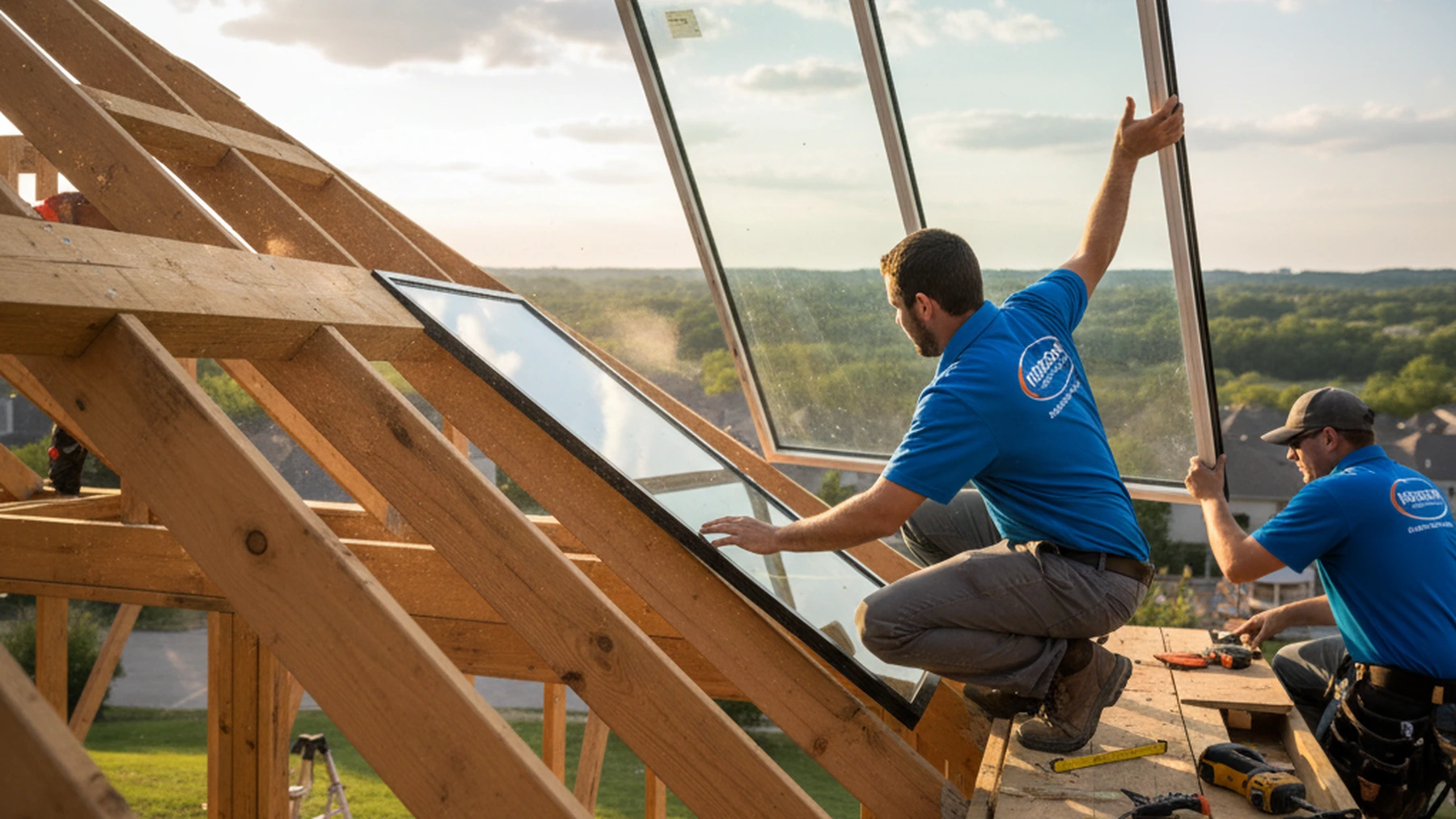
Vaulted roof sunroom installation is a multi-phase project. Understanding the sequence helps homeowners plan around the timeline and know what decisions need to happen before construction begins.
Design and permitting. Every sunroom addition in Blue Springs requires a building permit. Horizon Exteriors KC handles the permit process, including the structural documentation that the city requires for a cathedral roof addition. This phase typically takes two to four weeks depending on the municipality's review queue.
Site preparation. If your project requires a new foundation, site prep and concrete work happen first. If you are building over an existing deck, the team assesses whether the existing structure can carry the load or needs reinforcement before framing begins.
Framing. The cathedral roof framing is the structural backbone of the addition. Ridge beam sizing, rafter spacing, and connection to the home's existing structure are all determined during design and executed precisely during framing. This is where the vaulted shape takes form.
Glazing and roofing. Glass panels are set into the frame using thermal breaks and weatherproof gaskets. Any solid roof sections are flashed and sealed at the ridge and eave lines. Proper flashing at the connection to the existing house is one of the most critical details in the entire installation, and it is where many lower-quality sunroom builds develop problems within a few years.
Electrical and HVAC. Many homeowners add electrical for ceiling fans, lighting, and outlets during the build. If the sunroom will be fully conditioned, HVAC rough-in happens during framing. Connecting the sunroom to your home's existing system or adding a dedicated mini-split unit are both common approaches.
Finishing. Interior trim, flooring, and any custom details are completed last. At this stage, the room transitions from a construction zone to a finished living space.
Why Cathedral Sunrooms Add Value to Blue Springs Homes
A cathedral sunroom is not just a comfort addition. It adds functional square footage to your home and improves curb appeal from the street. The vaulted roofline reads as an architectural upgrade, not a tacked-on enclosure, which matters when buyers and appraisers evaluate the property.
For families, the room becomes the most-used space in the house within months of completion. Breakfast in natural light, a reading room, a space for plants, a home office with views of the yard. The ways homeowners use a cathedral sunroom are as varied as the homeowners themselves, but the common thread is that the room earns its place in daily life.
Blue Springs sits in a part of the Kansas City metro where homes have room to grow. Backyard additions are common, and a well-designed cathedral sunroom can anchor an outdoor living area, provide a transition between the interior and a deck or patio, and make the rear of a home feel as considered as the front.
Matching the Sunroom to Your Existing Home
A cathedral sunroom should look like it belongs. That means the exterior materials, the roofline pitch, and the window styles need to coordinate with what is already there. Horizon Exteriors KC works on homes across Blue Springs and the broader Kansas City area, which means familiarity with the architectural styles common in this region, traditional two-stories, ranch homes, craftsman builds, and newer construction.
Color matching for trim and frame materials, pitch matching for the cathedral ridge, and selecting glass packages that complement existing windows are all part of the design conversation. If your home has replacement windows installed, matching the glass package in the sunroom to those windows creates a unified look inside and out.
What Sets Horizon Exteriors KC Apart
Horizon Exteriors KC specializes in exterior home improvements across the Kansas City metro, including roofing, siding, windows, and sunroom construction. That range of expertise matters for a cathedral sunroom addition because the project sits at the intersection of multiple trades. The roofing knowledge informs how the connection to the existing house is flashed and sealed. The window experience informs glazing selection. The siding expertise informs how the exterior of the sunroom ties into the home's cladding.
Homeowners who hire a dedicated sunroom company and a separate roofing contractor and a separate window company often deal with coordination problems that lead to delays and gaps in responsibility when issues arise. Working with a single contractor who handles all of those disciplines eliminates that friction.
Horizon Exteriors KC also carries the licensing and insurance required for permitted work in Blue Springs and the surrounding Jackson County communities. Every cathedral sunroom project is built to local code, inspected by the city, and backed by the company's workmanship warranty.
Ready to Build Your Cathedral Sunroom in Blue Springs?
If you are ready to add a custom cathedral sunroom to your Blue Springs home, the next step is a consultation with the Horizon Exteriors KC team. We review your space, discuss your design goals, and put together a detailed project scope so you know exactly what you are getting before anything is signed.
Contact Horizon Exteriors KC to schedule your consultation.
You can also explore our full sunroom services and learn how our replacement windows can be paired with your sunroom design for a seamless look throughout your home. See the full range of what we build at our services page.
Frequently Asked Questions
Does a cathedral sunroom require a building permit in Blue Springs, MO?
Yes. Any sunroom addition in Blue Springs requires a building permit from the city. Horizon Exteriors KC manages the permit application and structural documentation on your behalf, so you do not have to navigate that process alone.
How does a cathedral sunroom differ from a standard sunroom?
The defining difference is the roof structure. A cathedral sunroom has a vaulted or peaked roof that rises to a central ridge, creating more overhead volume and drawing more natural light into the room compared to a flat or low-slope sunroom roof.
Can a cathedral sunroom be used in all four seasons in Missouri?
Yes, when built with insulated glass panels, proper framing, and thermal breaks in the frame system. Many homeowners also connect the sunroom to their home's HVAC system or add a dedicated mini-split unit for year-round comfort across all Missouri seasons.
How long does vaulted roof sunroom installation take in Blue Springs?
Total project timelines vary based on design complexity, permitting, and site conditions, but most cathedral sunroom installations in the Blue Springs area run from six to twelve weeks from permit approval to final walkthrough.
What foundation is required for a cathedral sunroom addition?
Most cathedral sunrooms are built on a concrete slab or stem wall foundation. In some cases, an existing deck can be reinforced to carry the load. The foundation type is determined during the design phase based on your site conditions and the planned size of the addition.