
Kansas City's swing from humid summers to icy winters makes the choice between a screened porch or three-season room about usable months, not just style. A screened porch keeps bugs out and air moving; a three-season room adds glass and insulation that stretches comfort into spring and fall. See Sunrooms built for this climate.
By Horizon Exteriors Team, KC Exterior Contractors
What's the Difference Between a Screened Porch and a Three-Season Room?
A screened porch is an open-air structure enclosed by mesh screening instead of glass. It blocks bugs and gives you shade and airflow, but the space stays exposed to outdoor temperature and humidity. A three-season room swaps that screen for insulated glass or vinyl windows, plus a solid roof and often a finished floor, so the design holds heat and blocks wind far better than screening alone. You'll also see it listed as a 3 season room in some Kansas City real estate listings and contractor quotes, though the construction is identical.
Both additions extend your living space outdoors, but the materials used in each build change how the room performs. A screened porch favors airflow and a lower footprint; a three-season room favors comfort and a more finished, home-like feel that many Kansas City homeowners want for spring and fall entertaining.
Which One Holds Up Better in Kansas City's Humid Summers and Cold Winters?
Kansas City summers bring heat and humidity that swell wood framing and stress screen mesh over time, while winter freeze-thaw cycles can loosen fasteners and crack caulking on lightweight structures. A screened porch, built mostly from screening and light framing, takes the brunt of both extremes directly since there's no glass or insulation buffering the interior.
A three-season room's insulated walls, tighter seals, and glass or vinyl panels handle those swings with less wear. The enclosed design sheds wind-driven rain and blocks pollen during allergy season, and it resists the humidity swelling that loosens screen frames over a few Kansas City summers.
How Many Months a Year Can You Actually Use Each One?
A screened porch in the Kansas City area typically gets steady use from late spring through early fall, roughly May into September, before overnight lows make an open-air space uncomfortable. A three-season room usually stretches that window further, often staying comfortable from early spring through late fall thanks to insulated glass and sealed construction.
On mild winter days, sunlight through the windows can even make a three-season room usable for a few hours without added heating and cooling, something a screened porch generally can't offer once temperatures drop.
How Much Does a Screened Porch Cost Compared to a Three-Season Room?
A screened porch generally costs less to build than a three-season room since it skips insulated glass, added window framing, and in many cases the electrical work tied to heating and cooling. A three-season room's higher cost reflects its windows, sealed roof system, flooring options, and any wiring needed for lighting, fans, or a mini-split unit.
Exact numbers depend on the size of the space, the materials you choose, and site conditions like an existing deck or patio slab. Horizon Exteriors KC scopes every project individually, and our Services page outlines the full range of exterior upgrades we build into Kansas City homes, from replacement windows to full room additions.
Which One Keeps Out Bugs, Rain, and Pollen Better?
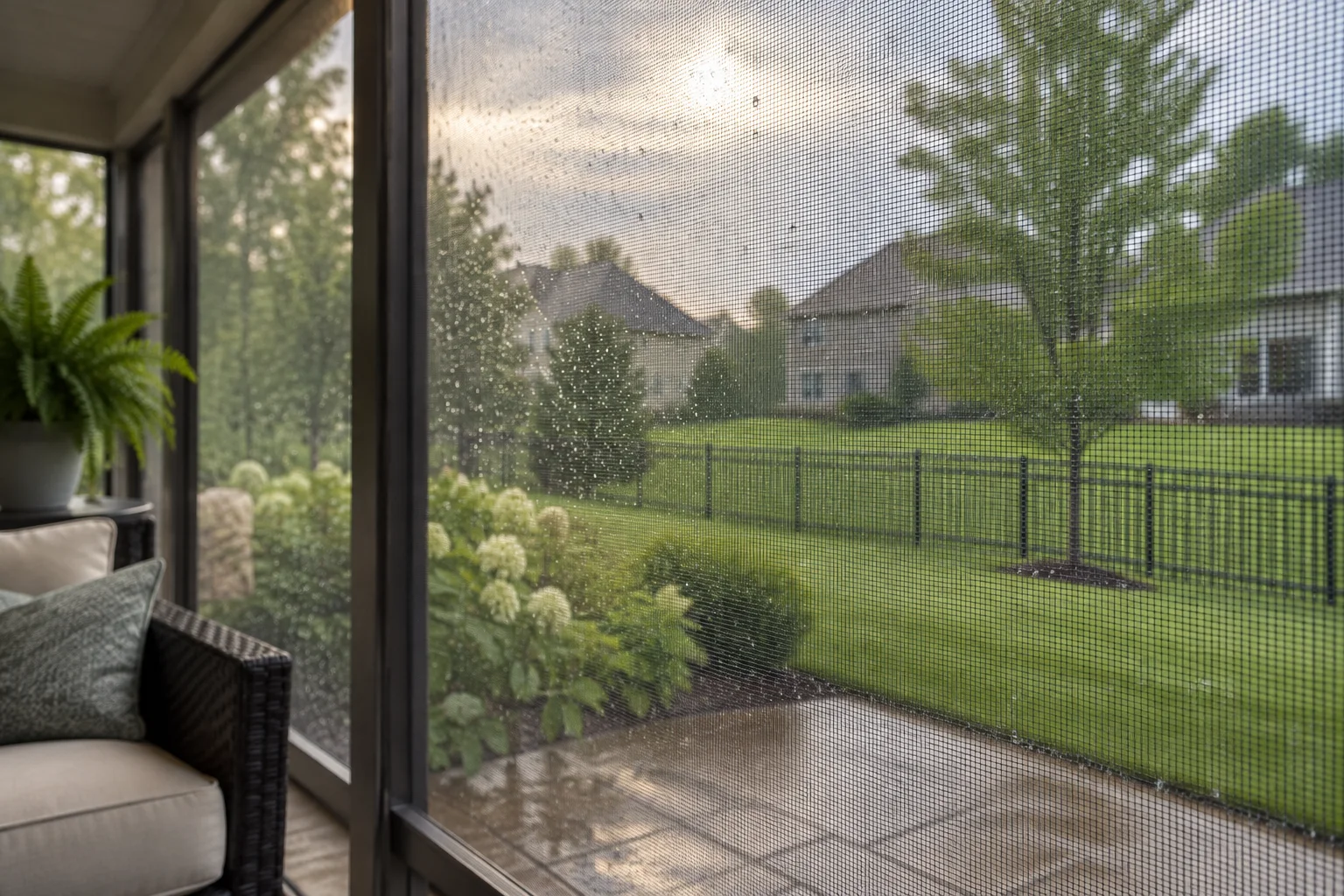
A screened porch does a solid job on bugs, but wind-driven rain and fine pollen can still pass through standard mesh, especially during Kansas City's spring storms. Screened porches also let in dust and cottonwood fluff during peak pollen weeks, which can be a problem for allergy-sensitive homeowners.
A three-season room's solid glass or vinyl panels seal the space completely, keeping out bugs, rain, and pollen in every season the room is open. For households dealing with seasonal allergies or families who want the porch usable during a sudden downpour, that sealed design is usually the deciding factor.
For Resale Value, Is It Screened Porch or Three-Season Room?
Buyers and appraisers generally view a three-season room as finished living space, similar to a sunroom, which tends to add more to a home's resale value than a screened porch. The insulated construction, real windows, and finished flooring read as a genuine room addition rather than an outdoor amenity.
A screened porch still adds value, particularly in neighborhoods where outdoor living is a selling point, but it's typically weighted closer to a deck or patio upgrade than a full room addition. If resale value is the priority, a three-season room usually offers the stronger long-term return, though the right choice still depends on your home's layout and your own plans for the space.
Can a Three-Season Room Be Heated for Year-Round Use in Kansas City?
Yes, in many cases. Adding a mini-split system, electric baseboard heat, or a small ductless unit can extend a three-season room's comfort well into winter, especially if the room already has insulated glass and a sealed roof. Supplemental heating and cooling closes the gap on the coldest and hottest days without a full structural overhaul.
True four-season comfort usually calls for upgrading wall and floor insulation, sealing the foundation, and confirming the room ties into your home's heating cooling system or a standalone unit, the same standard applied to year-round sunroom builds built for Kansas City's coldest months. Homeowners who start with a well-built three-season room have an easier upgrade path than those starting from a screened porch.
Frequently Asked Questions
Do you need a permit to build a screened porch or three-season room in Kansas City?
In most cases, yes. Kansas City area municipalities generally require a permit for any addition that changes your home's footprint, roofline, or electrical load, which covers most screened porches and three-season rooms. Requirements vary by city and HOA, so it's worth confirming specifics with your local building department before finalizing plans.
Can a screened porch be converted into a three-season room later?
Often, yes, if the existing footings, framing, and roofline can support insulated windows and additional weight. Conversion typically involves adding wall framing, glass or vinyl panels, and sometimes electrical work for heating and cooling. A contractor should evaluate the existing structure first, since some screened porches need reinforcement before the upgrade makes sense.
How long does it take to build a screened porch or three-season room in Kansas City?
Timelines depend on size and scope, but a screened porch usually moves faster since it skips window installation and insulation work. A three-season room takes longer due to framing, glazing, flooring, and any electrical additions. Weather, permitting timelines, and material availability can also shift the schedule in either direction.
Get a Screened Porch or Three-Season Room Estimate From Horizon Exteriors KC
Whether Kansas City's weather points you toward a screened porch or three-season room, Horizon Exteriors KC can walk your property and recommend the build that fits how you'll actually use it. Contact Us to schedule a free on-site consultation and get a project timeline specific to your home.