
Kansas City winters push Siding to its breaking point with freeze thaw cycles, ice, and wind driven snow. If you're wondering about the 7 signs your siding will not survive another Kansas City winter, look for cracking, warping, moisture underneath, and gaps that let cold air inside before the first freeze arrives.
By Horizon Exteriors Team, KC Exterior Contractors
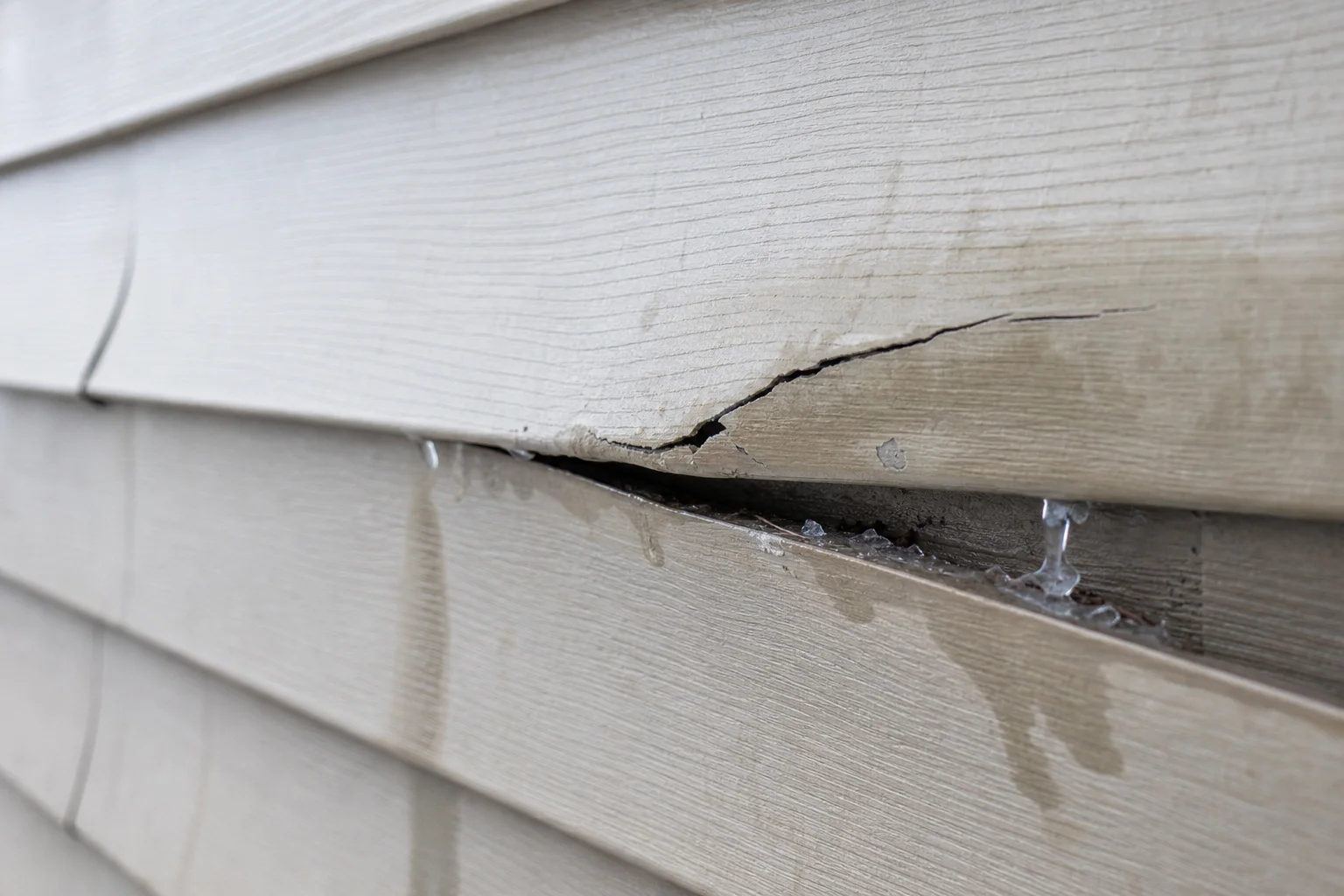
Most siding failures do not happen all at once. They show up as small warning signs months before a hard freeze finally cracks a panel wide open. Walk the perimeter of your home and check for these seven signs before the temperature drops:
- Visible cracks or splits, especially near corners and seams where panels expand and contract the most.
- Warped or bowed panels that no longer sit flat against the wall.
- Loose or missing sections that shift when you press on them or rattle in the wind.
- Gaps at the seams wide enough to see daylight or feel a draft.
- Soft, spongy spots near the base of the wall, a sign of hidden rot underneath.
- Fading, staining, or a chalky residue that signals the outer layer has broken down.
- Peeling paint or bubbling drywall on interior walls, which usually means water has already found its way past the siding line.
Any one of these on its own is worth a look. Two or more together usually mean the material is nearing the end of its useful life and additional damage will appear quickly once winter weather arrives.
Counting these seven signs works two ways: the ordinal order they are listed in above, and the cardinal total of how many you actually spot on your own walls. A homeowner who only notices sign seven, water showing up on an interior wall, is often further along than one who catches sign one, a hairline crack, early. The numbers matter less than catching any of them before winter locks the damage in.
How Freeze-Thaw Cycles Damage Siding Over a Kansas City Winter
Kansas City's winters are hard on exterior materials because the temperature rarely stays in one place. A 50-degree afternoon followed by a hard overnight freeze is normal here, and that swing is exactly what breaks siding down. Moisture that works its way into a small crack expands as it freezes, widening the gap. When the ice melts the next afternoon, water seeps in a little further. Repeat that cycle a dozen times over a season and a hairline crack becomes a section of siding that pulls away from the wall entirely.
Older vinyl siding is especially vulnerable because the material itself becomes more brittle as it ages, and cold temperatures make it stiffer and more likely to crack on impact from hail, tree limbs, or even a stray baseball. Fiber cement holds up better against temperature swings but is not immune to freeze-thaw damage once caulking and flashing around windows and doors start to fail.
How Much Snow and Ice Damage Can Siding Take Before It Fails
Siding is built to shed water, not hold it. A dusting of snow or a quick freeze rarely causes a problem, but sustained snow load against a wall, or ice that forms behind a loose panel, is a different story. Once water gets trapped behind siding it has nowhere to go, and the sheathing and framing underneath start absorbing moisture instead of the siding doing its job of keeping it out.
The amount of damage siding can take before it fails depends on the material, the installation quality, and how long a problem has gone unaddressed. A single storm rarely takes down a wall of siding on its own. It is the buildup, repeated freezing, thawing, and hidden moisture over several winters, that eventually causes panels to crack, buckle, or separate from the house.
When to Replace Siding Before Winter Hits in Kansas City
The best window for siding replacement in the Kansas City area is late summer through mid-fall, before the first hard freeze locks in cold temperatures for good. Scheduling early gives your contractor time to source materials, plan around weather delays, and finish the project before ice and snow make outdoor work slower and less predictable.
Can Siding Be Installed or Replaced During Winter?
Yes, siding replacement can be done during a Kansas City winter, but cold weather adds real constraints. Most vinyl siding manufacturers recommend against installation below a certain temperature because the material becomes brittle and harder to snap into place without cracking. Fiber cement and some engineered wood products are more forgiving in cold weather, but crews still work around snow, ice, and shorter daylight hours. Replacing siding before winter, rather than during it, usually means a faster, cleaner installation.
What Does It Cost to Replace Siding Before Winter?
Siding replacement costs vary by home size, material choice, and how much of the underlying sheathing needs repair once the old siding comes off. Rather than guessing at a number, the most reliable way to budget is a free in-home estimate that accounts for your specific home and the siding condition our team finds once the old material is removed.
What Happens If You Leave Failing Siding Unrepaired Through Winter
Ignoring the 7 signs your siding will not survive another Kansas City winter rarely makes the problem smaller by spring. Water that gets behind cracked or gapped siding during winter freezes, expands, and can force its way into wall cavities, insulation, and framing. By the time warmer weather arrives, a homeowner who could have replaced a damaged section in October may be facing mold remediation, insulation replacement, and interior drywall repair on top of the original siding work. A relatively small home improvement project handled early almost always costs less than the same problem left to compound through a full winter.
Repair or Full Replacement: How to Tell What Your Siding Needs
Not every damaged panel means the whole house needs new siding. A single cracked or warped section, caught early and isolated to one wall, can often be repaired or replaced panel by panel. Full replacement becomes the better choice when damage shows up in multiple sections, when the siding is near the end of its expected lifespan, or when moisture has already reached the sheathing underneath in more than one spot.
Average Lifespan of Siding in Kansas City's Climate
Most siding materials are built to last twenty to forty years, though Kansas City's freeze-thaw swings, hail, and humidity tend to shorten that range compared to milder climates. Those numbers are general guidelines, not a guarantee, and vinyl siding on the older end of that window is more likely to crack under cold-weather stress, which is one reason inspections matter more as siding ages rather than on a fixed schedule alone.
Material choice plays a large role in how long siding actually lasts. Vinyl siding remains one of the most affordable and widely used options for Kansas City homes, and modern formulations resist cracking and fading better than older generations of the product. Fiber cement costs more upfront but stands up especially well to hail, wind-driven rain, and the freeze-thaw cycling that defines a Kansas City winter, which is why homeowners planning to stay in a house long term often lean toward it. Choosing the right siding material for a Kansas City home usually comes down to balancing upfront cost against how much maintenance and replacement frequency a homeowner wants to take on over the years.
Frequently Asked Questions
What type of siding holds up best to Kansas City winters?
Fiber cement and newer, thicker vinyl siding products tend to perform best against Kansas City's freeze-thaw swings, hail, and wind. Fiber cement resists cracking and impact damage especially well, while modern vinyl siding offers a lower upfront cost with solid cold-weather performance. The right choice usually depends on budget, home style, and how long you plan to stay in the home.
How urgent are the 7 signs your siding will not survive another Kansas City winter?
Any single sign, a crack, a warped panel, or a soft spot near the base of a wall, is worth a professional look before winter. Multiple signs together suggest the material is failing and should be addressed before the first hard freeze, since cold weather typically speeds up existing damage rather than pausing it.
Can siding damage be cosmetic instead of structural?
Sometimes. Fading, chalking, or minor discoloration is often cosmetic and does not affect performance. Cracks, gaps, warping, and soft spots are different, they usually point to moisture reaching the wall behind the siding, which is a structural concern even if the damage looks minor from the street.
Does homeowners insurance cover winter siding damage?
Coverage depends on the cause and your specific policy. Damage from a sudden event like hail or wind is more commonly covered than gradual deterioration from age or ongoing freeze-thaw cycling. Reviewing your policy with your insurance provider before filing is the most reliable way to know what applies to your situation.
How long does a siding replacement take in Kansas City?
Most single-family home siding replacements take a few days to about a week, depending on home size, material, and weather. Additional repairs to sheathing or framing found once old siding comes off can extend the timeline, which is one reason an in-person estimate gives a more accurate schedule than a general average.
Get Your Free Siding Inspection Before Winter Hits
Catching these signs early is the difference between a straightforward repair and a full replacement once cold weather sets in. Contact Us to schedule a free siding inspection before the next Kansas City freeze.