
What a pergola costs in Kansas City depends on four line items: size, material, roof style, and site prep, not one flat number. Before comparing bids against a full Sunrooms build, Kansas City homeowners need each piece explained so a quote actually makes sense against the next one.
By Horizon Exteriors Team, KC Exterior Contractors
A pergola build breaks into five line items: frame material, footprint size, labor for pergola construction, the roof or cover system, and site prep like footings or a paver base. How these components combine, more than any single number, determines the pergola cost you'll actually see on a quote. Kansas City pricing tracks close to the national average for comparable size and material, since the region doesn't carry coastal material surcharges, though local permit fees and soil conditions still move the total.
How Pergola Size Changes Your Total Cost
Square footage is the single biggest driver of pergola cost. Material quantity, footing count and labor hours all scale with size, so a modest bump in footprint moves the total by more than homeowners expect.
10×10: The Compact Freestanding Option
A 10×10 footprint is the smallest size most Kansas City contractors will build a pergola at and still call it a usable outdoor room. It needs four posts, a simple beam and rafter layout, and minimal footing work, which keeps labor hours low relative to larger builds.
12×12: The Kansas City Average
Most homeowners in the Kansas City, MO metro land on a 12×12 footprint, and it's the size local contractors quote most often when someone asks about average cost with no other specs given. The jump from 10×10 to 12×12 is roughly a 44 percent increase in covered square footage, and material and labor costs track close to that same proportion.
14×16 and Larger: Where Cost Accelerates
Beyond 12×12, cost per square foot often climbs rather than holds flat, because larger spans need thicker beams, additional support posts, and sometimes engineered lumber or steel reinforcement to meet snow load requirements. A 14×16 pergola can run close to double a 10×10 build once those structural upgrades are factored in.
Attached or Freestanding
An attached pergola, built off the house using the existing wall or roofline as one support edge, typically costs less than a freestanding structure of the same footprint because it needs fewer posts and footings. Freestanding designs cost more but give homeowners flexibility to place the pergola anywhere the yard allows. The decision between a pergola and a different outdoor room altogether often comes down to year-round versus seasonal use rather than footprint alone.
How Material Choice Affects Pergola Cost
Material choice in the Kansas City area is the second-biggest lever on pergola cost, and it also sets the long-term maintenance schedule.
Cedar and Pressure-Treated Wood
Cedar is the traditional choice for a wood pergola in Kansas City because it resists rot and insects naturally and takes stain evenly. Pressure-treated wood costs less than cedar up front and works well for homeowners prioritizing a lower material bill, though it needs more frequent refinishing to hold its color.
Aluminum
Aluminum pergolas cost more per square foot in material than wood but need almost no annual maintenance, no repainting cycle, and won't warp, crack or attract insects. Aluminum framing also holds up over a decade of Kansas City weather without the recoating cycle wood needs, which is where the real cost gap narrows against the higher upfront material price.
Vinyl
Vinyl pergola kits sit between wood and aluminum on price and require essentially zero maintenance, though most Kansas City buyers see fewer size and roof-style options with vinyl than with wood or aluminum.
Steel
Steel is the strongest option for larger spans or heavy roof loads, but it carries the highest material cost of the four and needs a rust-resistant coating in humid Kansas City summers.
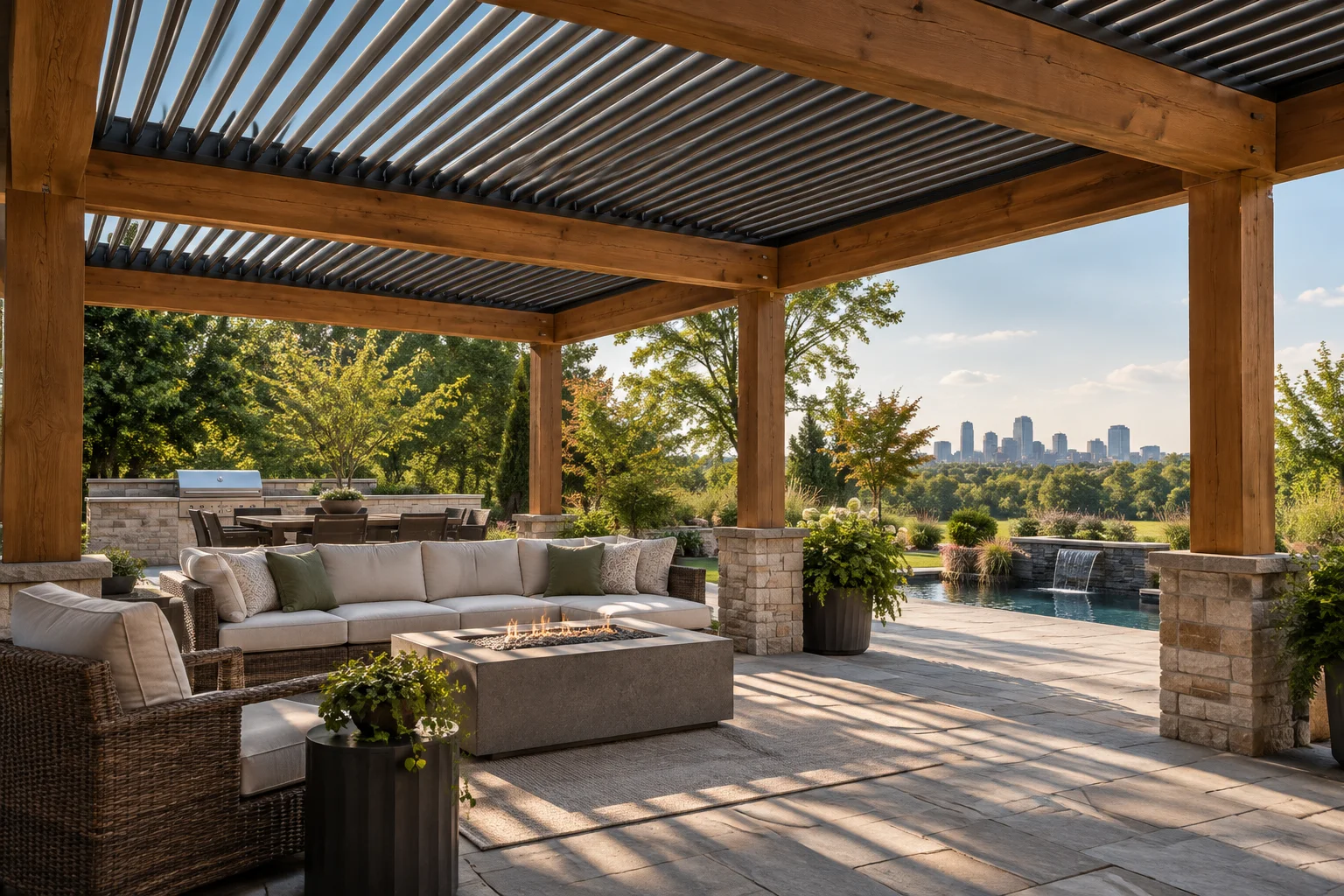
Roof and Louvered Covers: What They Add to the Price
A bare pergola frame with open rafters costs the least, but most Kansas City homeowners add some form of cover to get real shade and rain protection. A solid roof panel, whether polycarbonate or metal, adds a moderate percentage to the base structure cost and turns the pergola into a space usable in light rain.
A motorized louvered pergola cover costs considerably more, often multiplying the total project cost, because it adds a motor, controller, weather sensors and the aluminum louver blades on top of the base frame. It's the closest a pergola gets to a true three-season room, but it's also the single most expensive upgrade on the list.
Installing a Pergola vs Building It Yourself
Homeowners who build a pergola themselves save on labor cost up front, but Kansas City building codes still apply to a self-built pergola, and an improperly set footing is the most common reason a DIY structure needs rework within a few years.
Professional installation adds labor to the bill, but it bundles in code-compliant footings, proper post anchoring for wind load, and usually a workmanship warranty a DIY build won't carry. A full-service exterior contractor handling Services beyond just the pergola, footings, staining, and any adjacent siding or trim work, can also shave real time off a multi-part backyard project by scheduling it as one job instead of three.
The Extra Costs Homeowners Forget
The base pergola price rarely covers everything that ends up on the final invoice.
Permits. In most Kansas City area jurisdictions, a permanent pergola over a certain size or attached to the house requires a building permit, while a small freestanding kit sometimes doesn't, so this is worth confirming with the local building department before a contract is signed. Permit fees are typically a small fraction of the total project cost but can add processing time.
Electrical. Adding outlets, string lighting, ceiling fans or heaters under the pergola means running new circuits, which is billed separately from the structure itself and priced by the electrician's own scope, not the pergola contractor's.
Staining and finishing. A wood pergola needs its first stain or sealant coat within the first year and then on a recurring cycle after that; some contractors bundle the first coat into the install price and some bill it as an add-on, so ask which applies before signing.
Foundation and footings. Soil conditions across the Kansas City, MO area vary enough that a footing depth adequate on one lot can fail inspection on another, and local codes often require additional excavation or concrete on sites with poor drainage, which adds to the base cost.
Frequently Asked Questions
What is the average cost of a 12×12 pergola in Kansas City?
A 12×12 pergola is the size most Kansas City contractors quote as their baseline, and its cost sits between a compact 10×10 build and a larger 14×16 structure. Material choice moves it more than almost any other factor, so a wood frame and an aluminum frame at the same footprint can land in noticeably different ranges.
Do I need a permit for a pergola in Kansas City?
Usually yes for a permanent, attached, or larger freestanding structure, though requirements vary by city and county within the metro. A licensed contractor should confirm the exact threshold with the local building department, since building without a required permit can create problems at resale.
Is an aluminum pergola cheaper than a wood pergola long term?
Wood costs less to buy but needs recurring staining, sealing and occasional repair. Aluminum costs more upfront but needs almost no maintenance over a decade. For homeowners planning to stay in the home long term, the total cost of ownership often favors aluminum even though the initial quote is higher.
How much does a motorized louvered pergola cost compared to a standard roof?
A motorized louvered cover costs substantially more than a solid or open roof because it adds a motor, controls and moving aluminum blades on top of the base structure. It's priced as a premium upgrade rather than a standard inclusion on most quotes.
Is it cheaper to build a pergola myself or hire a contractor?
A DIY kit saves on labor cost but shifts the risk of code compliance, footing depth and wind-load anchoring onto the homeowner. Professional installation costs more upfront but usually includes a workmanship warranty a self-built structure won't have.
Get a Pergola Quote Scoped to Your Kansas City Yard
Every yard has a different soil condition, sun exposure, and size constraint, and those details change what a pergola costs in Kansas City more than any national average ever will. Reach out through Contact Us to get a pergola cost estimate built around your actual property, not a general estimate.